
Photo by Silas Baisch on Unsplash
Photo Description: A large ocean wave representing the powerful emotional impact of trauma memories that feel present rather than past. Over ocean wave is a light blue overlay with the words “Why Trauma Memories Feel Stuck in Time, By Kandace Ledergerber, LPC/LMHC, Certified EMDR Therapist”
Understanding How the Brain Stores Trauma and How EMDR Therapy Phoenix Helps It Move Forward
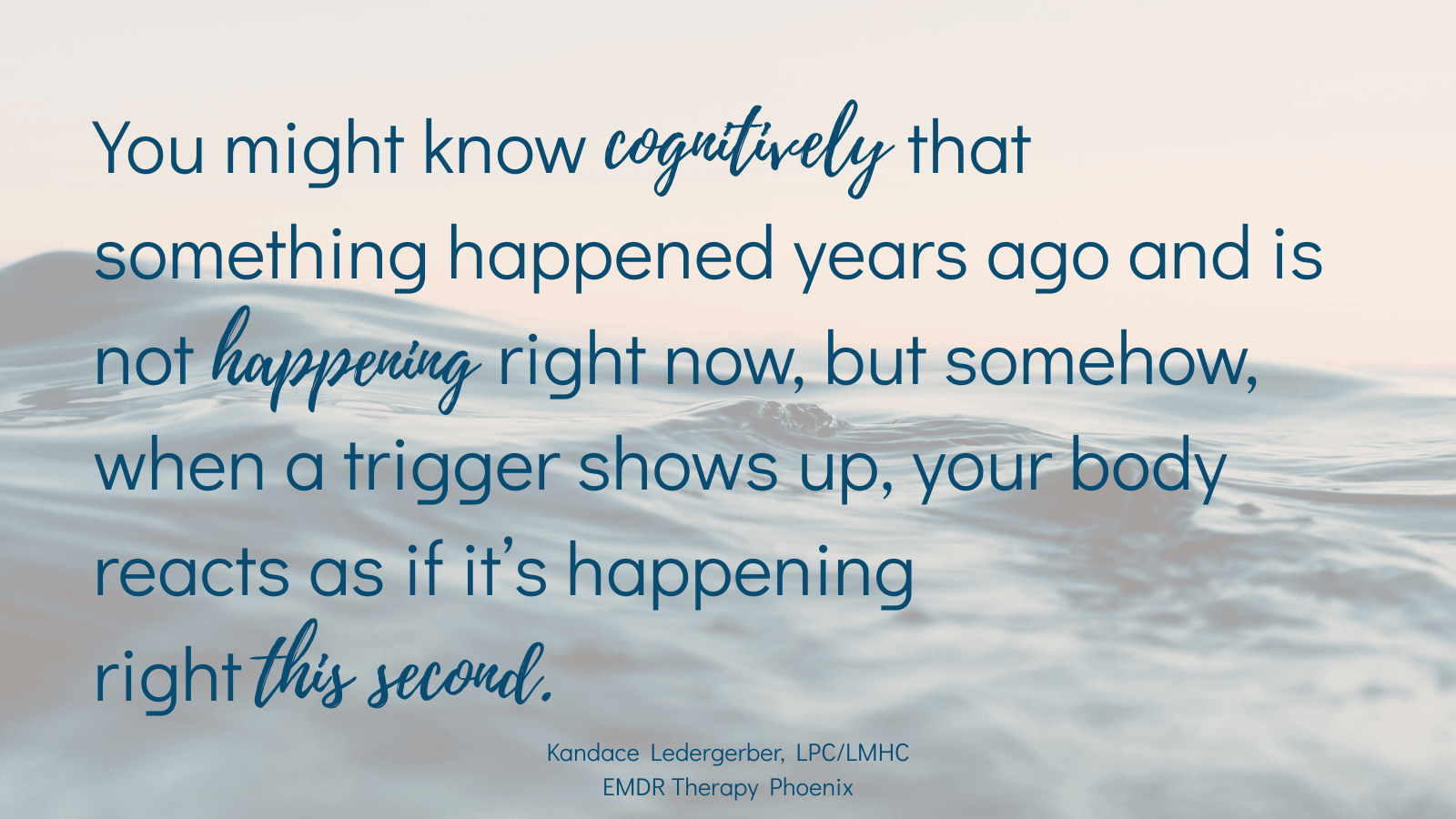
Photo by Silas Baisch on Unsplash
Photo Description: Quote graphic explaining how trauma triggers can make the body react as if something is happening right now.
There’s a way that trauma memories differ from regular run-of-the-mill memories.
You might know cognitively that something happened years ago and is not happening right now, but somehow, when a trigger shows up, your body reacts as if it’s happening right this second.
Your breath comes in faster.
Your thoughts spiral.
You feel completely flooded with fear, shame, anger, or overwhelm.
And somewhere inside you may wonder: Why does this still impact me so much?
If this has ever happened to you, it doesn’t mean you’re weak, dramatic, or “stuck in the past.” It just means that your brain hasn’t had the chance to fully process that traumatic experience in a way that the system could digest it.
And understanding that can change how you see your healing journey.
Key Takeaways
• Trauma memories can feel “stuck in time” because overwhelming experiences are stored differently in the brain and nervous system.
• When a trigger appears, the body can react as if the experience is happening again, even when you know logically that it happened years ago.
• These reactions are protective responses from the nervous system, not signs that something is wrong with you.
• EMDR Therapy helps the brain process trauma memories so they can move from something that feels present to something that feels like part of the past.
• As healing progresses, many people notice that the memory stays, but the emotional activation begins to change.
Trauma Memories Aren’t Stored Like Other Memories
Most of the experiences we go through get processed by the brain in a fairly natural way.
Think of it like this: your brain is constantly sorting and filing away information.
At the end of the day, memories get integrated into a larger story of your life. They become something like “Wow, what a day. Now it’s over.”
Trauma memories often don’t go through that same filing process. But instead, they can get stored in a way that feels raw and more emotionally or sensory focused.
This is why trauma memories often show up as:
• vivid images
• body sensations
• emotional reactions
• intrusive thoughts
• sudden waves of fear, shame, anger, or overwhelm
Rather than feeling like a distant memory, trauma memories can feel like they are happening in the present moment.
Almost like a tab that never fully closed.
Why Trauma Can Feel Like It’s Happening Again
When something overwhelming happens, the brain shifts into survival mode.
The parts of the brain responsible for deciding if a threat is near and our emotional memory become very active, while the areas responsible for reasoning, context, and time awareness become less engaged.
In other words:
In these moments, the brain prioritizes survival, not reflection. Which makes sense, after all, if you’re running for your life, you’re not also contemplating life’s deepest moments.
So instead of storing the experience as something that happened then, the brain stores pieces of the memory in ways that can feel very present later.
This is one reason trauma triggers can feel so incredibly intense.
A smell, tone of voice, environment, or relationship dynamic can activate the nervous system in ways that feel confusing or disproportionate to the present moment, because it’s activated a trigger.
If this resonates, you may also want to read → When Trauma Triggers Take Over: Understanding Your Nervous System & How EMDR Therapy Helps You Heal. That article explains how trauma triggers activate the nervous system and why reactions can feel so automatic.
The Nervous System Is Trying to Protect You
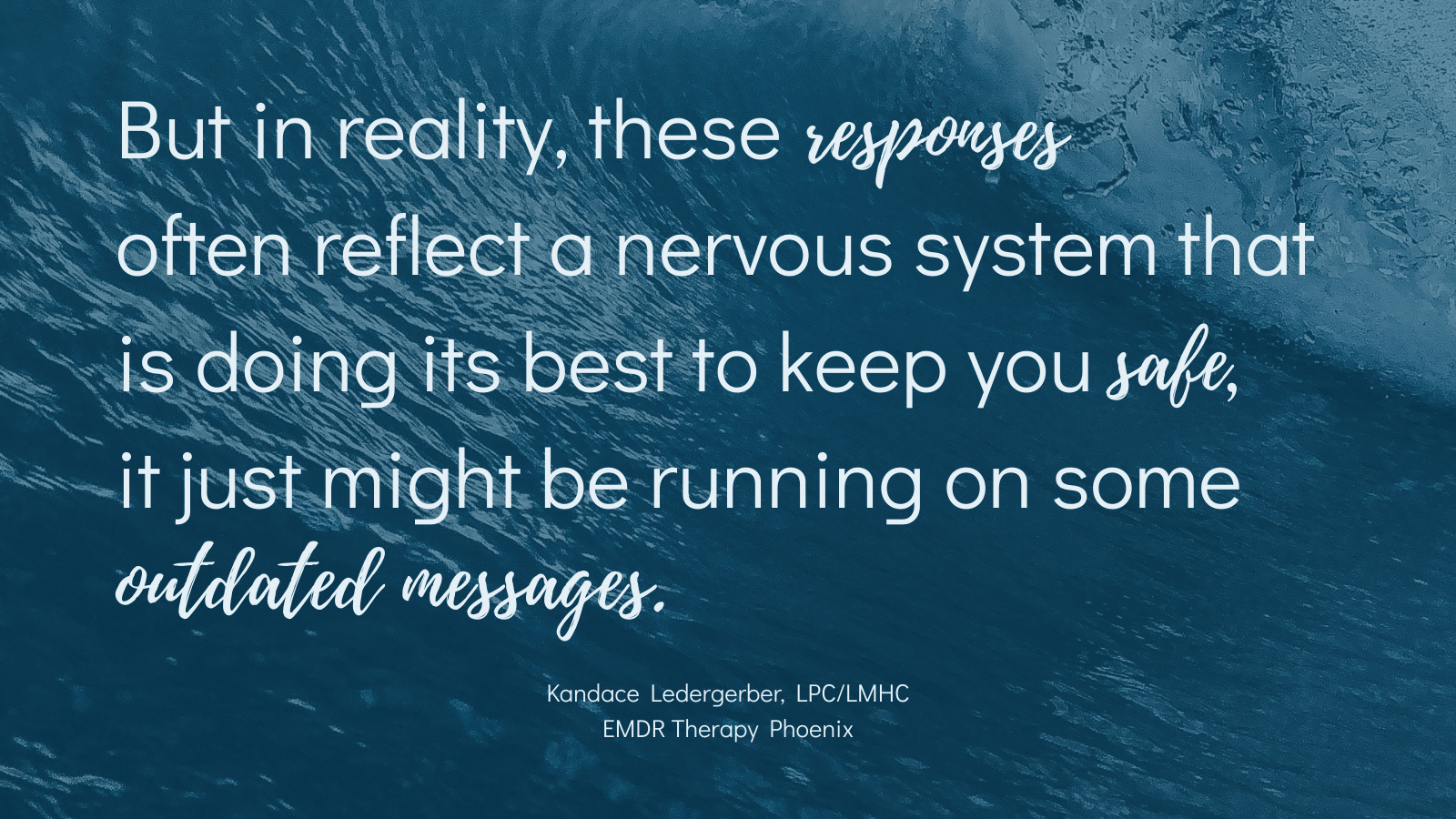
Photo by Silas Baisch on Unsplash
Photo Description: Trauma responses often reflect a nervous system trying to stay safe. Therapy helps process the experiences that created those protective patterns.
It’s important to understand that these responses are not signs of failure and please here me that you haven’t done something wrong.
These are protective patterns.
Your nervous system learned something important at the time of the trauma and if it could talk it might say something like “I need to stay hyper-alert and make sure that never ever happens again.”
The brain is incredibly good at learning patterns related to danger and even perceived danger and it’s attempt to keep us safe.
The challenge is that sometimes those patterns keep showing up long after the threat has passed.
This can look like:
• feeling constantly on edge
• being hyper-aware of other’s moods or reactions
• shutting down or feeling numb
• overthinking or ruminating over little things
• difficulty feeling safe in relationships with others
Many people blame themselves for these reactions, asking themselves, “What is wrong with me?”
But in reality, these responses often reflect a nervous system that is doing its best to keep you safe, it just might be running on some outdated messages.
How EMDR Therapy Helps Trauma Memories Move Forward
Now I am biased, but I believe (and have seen) that this is where EMDR Therapy can be incredibly helpful.
EMDR stands for Eye Movement Desensitization and Reprocessing, a trauma therapy approach designed to help the brain process and integrate traumatic memories that feel stuck.
Rather than simply talking about trauma, EMDR works with how memories are stored in the brain and the nervous system.
During EMDR therapy, bilateral stimulation (such as eye movements, tapping, or tones that move left to right) helps activate the brain’s natural processing system. Now, research doesn’t necessarily tell us why this is effective, but we do know that over time, many people notice a shift in their perceptions of the trauma memory and how it feels to them.
Instead of feeling like a trauma memory is still happening, the memory begins to feel more like something that happened in the past or “just another memory.”
The emotions often become less overwhelming and new insights and perspectives can form.
And the nervous system no longer has to stay at the same level of high alert protection.
If you'd like a deeper explanation of how EMDR works, you may find this guide helpful for the full explanation of how EMDR resolves this, read the guide.
What Healing Often Looks Like in EMDR Therapy
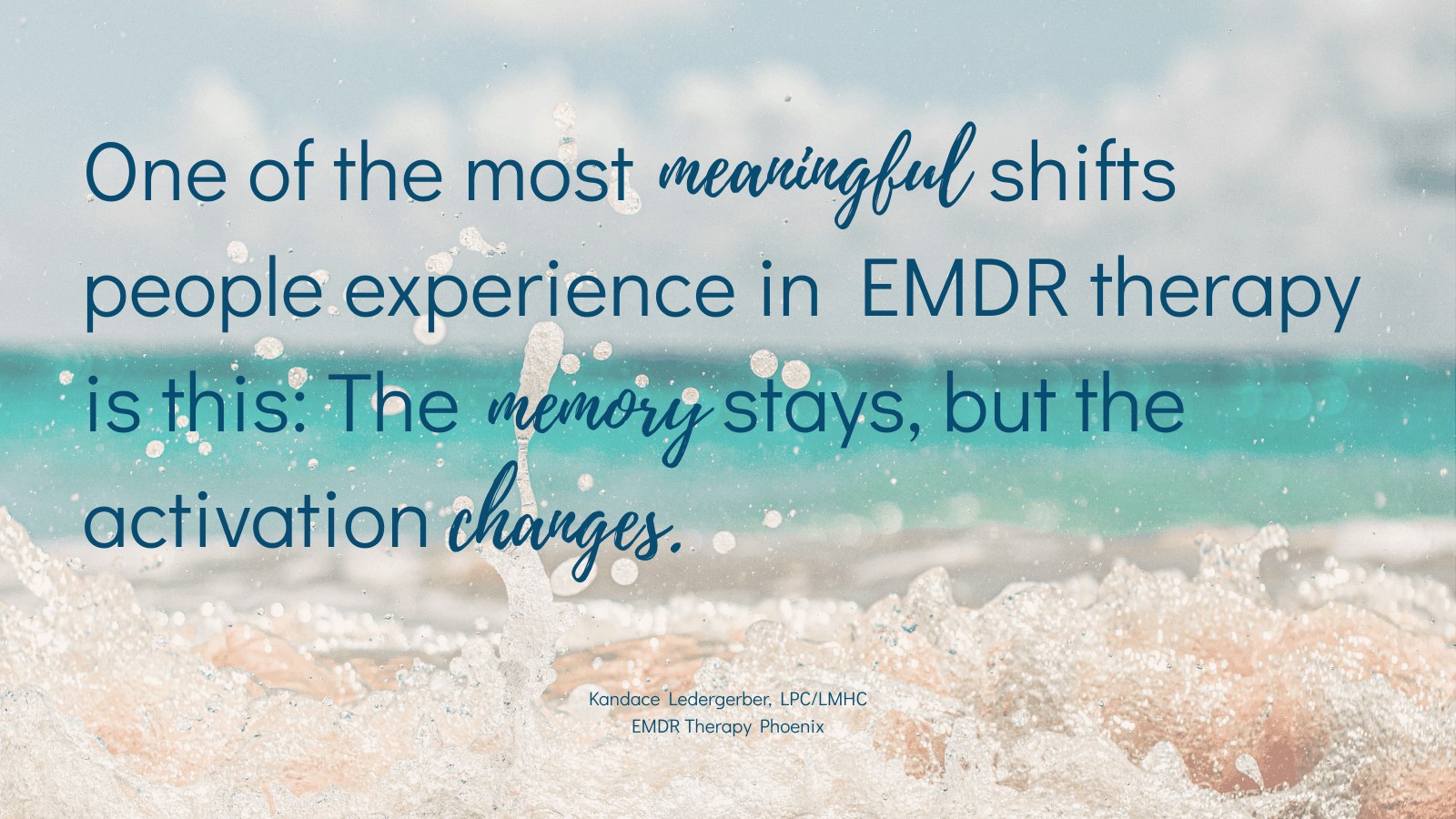
One of the most meaningful shifts people experience in EMDR therapy is this:
The memory stays, but the activation changes.
Instead of, “I feel like I’m back there again.”
The experience may begin to feel more like, “That happened to me, and it sucked, but it’s not happening anymore.”
The brain is finally able to store the experience with a firm grasp of context, time, and perspective.
What to Expect if You’re Considering EMDR Therapy
If you’re curious about EMDR therapy, the process usually begins slowly and collaboratively.
Early sessions often focus on:
• understanding your goals
• building safety and grounding skills
• learning how your nervous system responds to stress
• identifying the memories or patterns that still feel unresolved
If you want a step-by-step look at what the beginning of EMDR therapy can look like, this article walks through the process.
Many people are surprised to learn that EMDR therapy doesn’t require them to relive every detail of trauma, although some find it helpful to “trauma dump” at the beginning.
The focus of EMDR is really around helping the brain process what has been stuck so that the nervous system can move toward greater safety and balance, which allows for the whole person to move forward, not just in parts.
Trauma Healing Is About Movement
Trauma memories can feel frozen in time, but healing is about movement. And sometimes, even appreciating the small movements as a win.
Movement in how memories feel.
Movement in how you respond to stressors.
Movement in how you feel in relationship with others.
With the right support, many people find that experiences that once felt overwhelming begin to lose their grip. And they can start to really live the life they have been craving.
TL;DR
Trauma memories can feel “stuck in time” because overwhelming experiences are stored differently in the brain and nervous system.
Triggers can activate those memories in ways that make them feel like they are happening all over again.
EMDR therapy helps the brain process and integrate these experiences so they feel like part of the past rather than something that is still happening.

About the Author
Kandace Ledergerber, LPC/LMHC, Certified EMDR Therapist
Kandace helps adults who feel stuck in the hamster wheel of anxiety and perfectionism reconnect with a sense of grounding, self-trust, and emotional steadiness. Through EMDR therapy and nervous system-informed work, she supports clients in moving out of survival mode and into a more grounded, meaningful life.
She specializes in trauma recovery, anxiety and perfectionism, and healing the lingering effects of childhood and relational trauma. Her work focuses on helping clients process painful experiences that still feel "stuck" so they can move forward with greater peace, confidence, and emotional freedom.
She offers EMDR therapy in Phoenix, anxiety therapy, and EMDR Intensives in Arizona.
Learn more about Kandace's background, approach, and services on her About page.