Photo by Linus Nylund on Unsplash
Photo Description: Ocean waves with a soft pastel sky overlay displaying the title “3 Myths About Anxiety Therapy and How EMDR Therapy Phoenix Approaches Anxiety Differently” by Kandace Ledergerber, LPC/LMHC, Certified EMDR Therapist in Phoenix.
Updated March 2026
Many people who reach out for anxiety therapy have already tried a few things... and then tried a few more things.
They’ve tried meditation apps.
They’ve tried breathing exercises.
Some have even tried therapy before.
And often the message I hear when someone schedules a consultation is something like this:
"I’ve tried therapy, and I’ve tried meditation. None of that stuff really worked for me. But a friend mentioned EMDR therapy… so I figured I’d try... again."
If that sounds familiar, you’re not alone, and I get it.
Anxiety can be incredibly frustrating when you understand it cognitively but still feel stuck in patterns that seem to run your life. And sometimes the expectations we carry into therapy are shaped by myths about what therapy is “supposed” to look like, not what it actually can look like.
So let’s talk about a few of the most common myths I hear from people considering anxiety therapy, and how EMDR therapy often approaches anxiety from a different angle.
Key Takeaways
Seeking anxiety therapy isn’t a sign of weakness. Many high-functioning people struggle with anxiety behind the scenes.
Good therapy is more than venting about problems. Different approaches work with anxiety in different ways.
EMDR therapy focuses on how the brain stores distressing experiences that can fuel anxiety.
Healing anxiety often involves addressing deeper patterns, not just managing symptoms.
Progress in therapy isn’t instant, but meaningful shifts often happen over time.
Myth #1: “I’m a Smart, Capable Person… Why Can’t I Just Solve My Own Anxiety?”
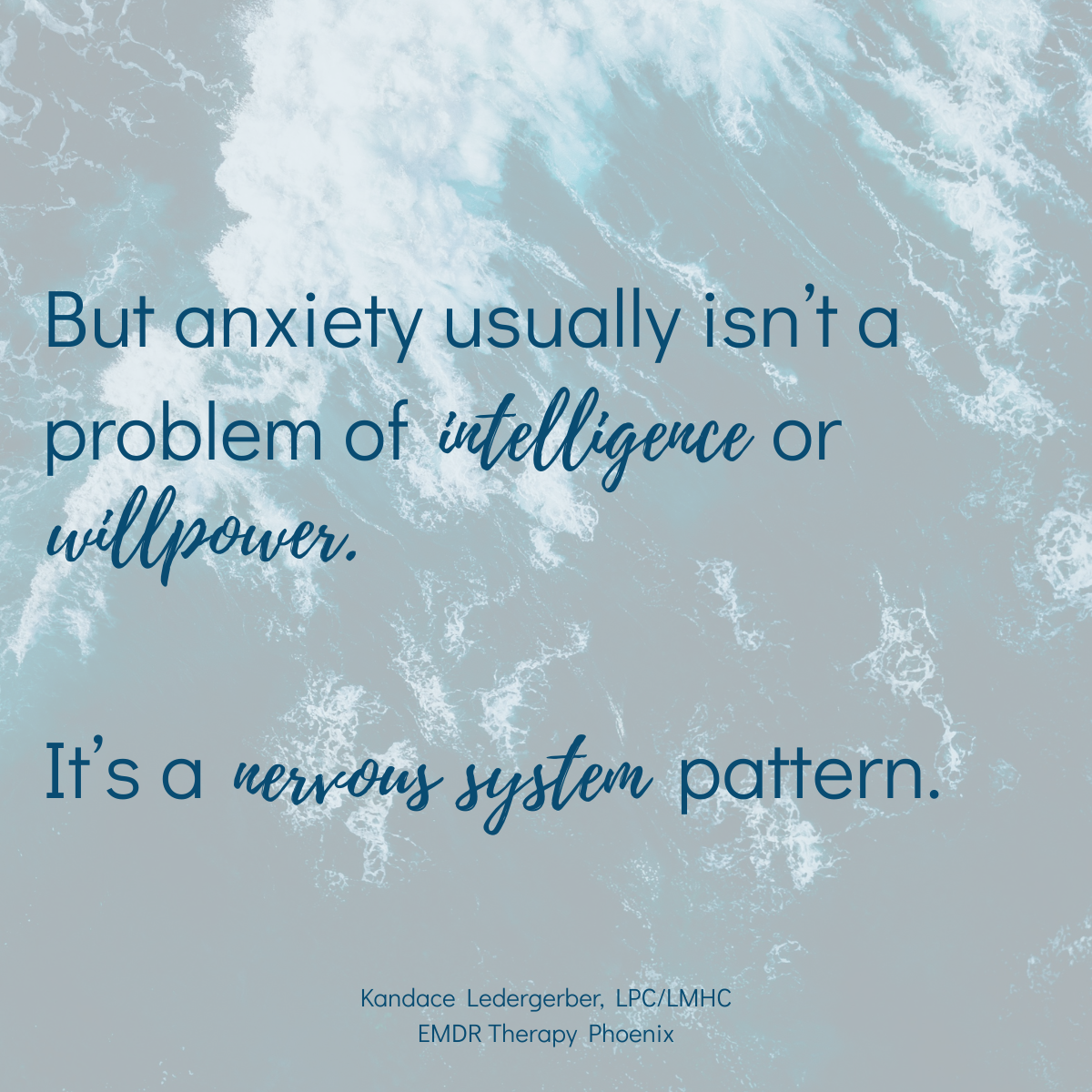
Photo by Ivan Bandura on Unsplash
Photo Description: Ocean background with quote “But anxiety usually isn’t a problem of intelligence or willpower. It’s a nervous system pattern.” Graphic created by Kandace Ledergerber, Certified EMDR Therapist in Phoenix.
This is one of the most common things I hear when someone reaches out for anxiety therapy.
It often sounds something like this:
"I’ve read the books."
"I’m aware of the things that make me anxious."
"I know my thoughts aren’t logical… but my anxiety still won’t shut off."
Many of the people I work with are incredibly thoughtful, insightful, and capable individuals. They’ve already spent many hours trying to understand their anxiety. They’ve tried meditation, breathing exercises, journaling, podcasts, self-help strategies, and all the S.M.A.R.T goals in the world.
And yet, the anxiety tap just won’t shut off.
Underneath those questions, I often hear a discouraging belief - “If I can’t figure this out on my own, maybe therapy won’t help either.”
But anxiety usually isn’t a problem of intelligence or willpower.
It’s a nervous system pattern.
Your brain learned somewhere along the way that staying alert, anticipating problems, or preparing for the worst possible scenario was necessary. Once the brain learns that pattern, it can keep repeating it automatically, even when you logically know you’re safe.
That’s why so many people say something like:
"I know I shouldn’t be anxious about this… but my brain keeps spinning out of control, and my body reacts anyway."
Understanding anxiety intellectually is helpful, but insight alone doesn’t always change the pattern that our bodies learn to feel safe.
This is one reason approaches such as EMDR therapy in Phoenix focus less on simply talking about anxiety and more on helping the brain process the experiences that may be fueling it underneath the surface.
When those experiences are processed, the nervous system often begins to respond differently, and anxiety can start to loosen the reins a bit more.
Not because you “figured it out,” but because your brain no longer needs to stay on high alert.
Myth #2: Anxiety Therapy Is Just Venting While the Therapist Asks “How Does That Make You Feel?”
Movies and TV shows have created a pretty specific image of therapy.
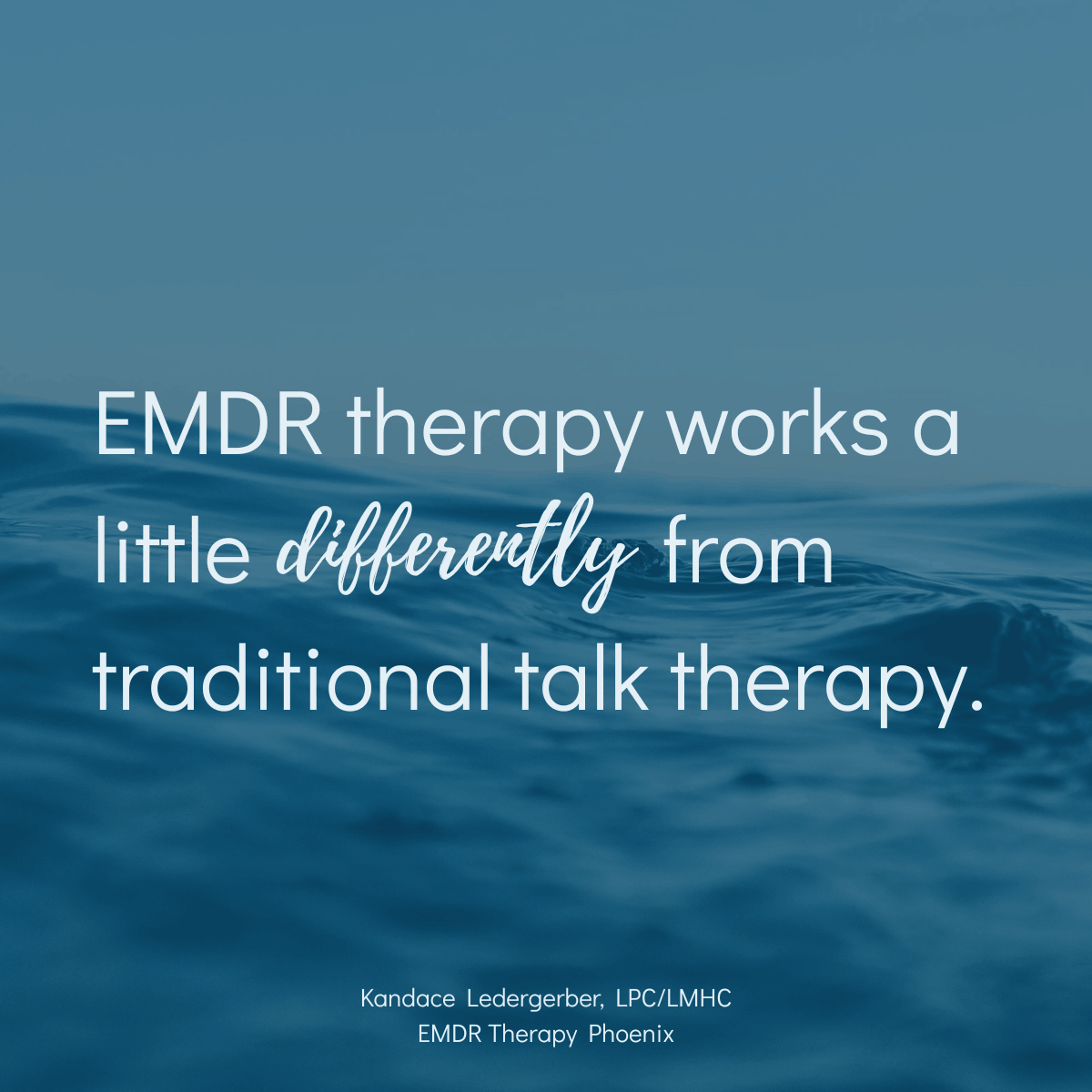
Photo by Matt Hardy on Unsplash
Photo Description: Calm ocean graphic with the quote “EMDR therapy works a little differently from traditional talk therapy.” Educational image about EMDR therapy Phoenix for anxiety by Kandace Ledergerber LPC/LMHC.
Someone lying on a couch.
A therapist quietly taking notes.
A lot of talking about feelings.
And while having a safe place to talk is certainly part of therapy, good therapy is usually much more active than that.
Different therapists use different approaches to help people work with anxiety. For example:
Cognitive Behavioral Therapy often focuses on looking at the patterns in our thoughts and behaviors that fuel the anxiety.
Some approaches explore how to navigate life challenges and relationships through an anxiety lens.
Other approaches focus on developing more flexible thinking and learning to relate to thoughts and feelings differently.
EMDR therapy works a little differently from traditional talk therapy.
Rather than only talking about experiences, EMDR uses bilateral stimulation, which helps the brain process experiences that still feel unresolved and continue fueling anxiety patterns. When those experiences are processed, the emotional intensity connected to them can shift.
One of the first things we often work on in EMDR therapy is developing resources that actually help someone regulate their nervous system.
Many people have been told things like:
“Take a deep breath.”
“Try to relax.”
“Just meditate and let things go.”
But if those tools don’t feel effective, they can start to feel frustrating, and many people then turn their frustration in on themselves.
In EMDR therapy, we often use guided imagery and other resourcing exercises to help people build tools that work for their nervous system specifically. Instead of generic coping strategies, we’re creating resources that feel meaningful and accessible to that individual.
For many people, this is one of the first noticeable shifts. They finally have tools that actually help them calm their nervous system when anxiety spikes.
(If you want to learn more about how EMDR therapy works, you can read my full guide here.
If you’ve tried many of the usual strategies for anxiety and still feel stuck, you’re not alone. Many of the clients I work with felt the same way before exploring EMDR therapy in Phoenix.
If you’re curious whether this approach might help with your anxiety, you’re welcome to schedule a free 15-minute consultation where we can talk about what you’ve tried and what you’re hoping will feel different moving forward.
Myth #3: If EMDR Therapy Works, My Anxiety Should Disappear in a Few Sessions
Another myth I occasionally hear is the idea that EMDR therapy should work instantly, and I understand how easy it is to fall into that way of thinking. Many people who struggle with anxiety and perfectionism learned early on that getting things right quickly mattered. Maybe mistakes were criticized, emotions had to be managed alone, or the stakes in the environment felt high.
When a nervous system grows up in that kind of pressure, it often learns to solve problems fast and aim for perfection as a way to stay safe. So it makes sense that the brain might bring that same urgency into therapy, hoping that healing will happen just as quickly.
If it doesn’t, people sometimes assume something must be wrong with them or the therapy.
The truth is a little more nuanced.
EMDR therapy can sometimes feel faster than traditional talk therapy because it works directly with how the brain processes experiences. But that doesn’t mean healing happens overnight (although, trust me, I wish it did.)
We also have to remember that anxiety patterns often develop over many years.
They may be shaped by repeated experiences, messages we received growing up, or stressful events that left a strong imprint on the nervous system.
Processing those patterns takes time.
In EMDR therapy, we often start to see small shifts early on, especially once clients begin building resources and feeling more stable internally. Over time, as deeper experiences are processed, those shifts can expand.
Sometimes the changes are subtle at first.
Someone may notice they’re reacting differently in situations that used to trigger anxiety.
They may feel calmer in moments that used to spiral quickly.
They may notice their inner dialogue softening or the ability to hold to a boundary.
These shifts are worth noticing and celebrating. They are signs that the brain is learning a different way to respond.
If you’re curious about what EMDR therapy actually looks like in practice, you can read more about that here: What to Expect in Your First EMDR Therapy Session.
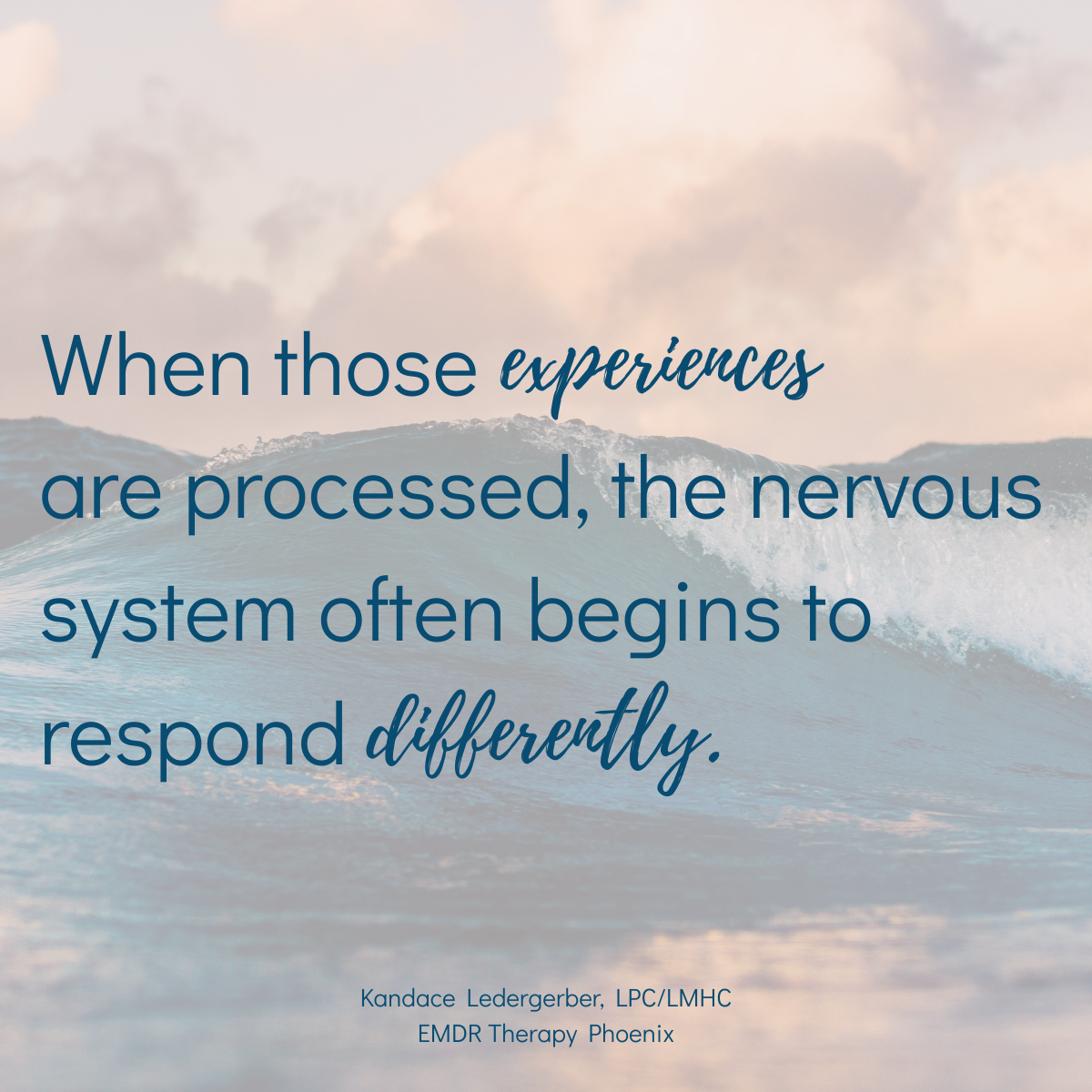
Photo by Silas Baisch on Unsplash
Photo Description: Ocean wave image with calming colors and the quote “When those experiences are processed, the nervous system often begins to respond differently.” Educational graphic related to EMDR therapy for anxiety in Phoenix.
How EMDR Therapy Can Help With Anxiety
Anxiety often gets treated as if it’s purely about the present moment.
But in many cases, anxiety is connected to experiences that the brain never fully processed.
When those experiences remain “stuck,” the nervous system can continue reacting as if the threat is still present, even though it’s long past.
EMDR therapy helps the brain process those experiences so they can finally be stored as something that happened in the past rather than something that still feels active in the present.
This doesn’t mean EMDR therapy is a quick fix or a magic solution.
What it can offer is a different framework for understanding what fuels anxiety and a structured way to help the brain move through those experiences.
For many people, that shift opens the door to feeling calmer, more grounded, and less controlled by anxious patterns.
Finding the Right Anxiety Therapist
One of the most important parts of therapy is finding someone who feels like the right fit for you.
It’s completely okay to ask questions during a consultation. You can ask about:
The therapist’s approach
What therapy might look like
How progress is tracked
Whether EMDR therapy might be appropriate for your situation
Therapy works best when there is trust, collaboration, and a shared understanding of the goals you’re working toward.
If you’re exploring options for anxiety therapy and EMDR therapy in Phoenix, you’re welcome to reach out for a consultation. I offer free 15-minute consultations so we can talk about what you’ve tried before, what’s been frustrating, and whether EMDR therapy might be a good fit for what you’re hoping to change.
And if it turns out I’m not the right fit, I’m always happy to help point you toward someone who might be.
TL;DR
Many people seeking anxiety therapy have already tried meditation or therapy before and still feel stuck.
Many people who struggle with anxiety feel frustrated because they understand it, but still can’t turn it off.
Good therapy involves more than just venting about problems.
EMDR therapy focuses on how the brain stores distressing experiences that may fuel anxiety.
Healing takes time, but meaningful shifts often happen as the brain processes those experiences.

About the Author
Kandace Ledergerber, LPC/LMHC, Certified EMDR Therapist
Kandace helps adults who feel stuck in the hamster wheel of anxiety and perfectionism reconnect with a sense of grounding, self-trust, and emotional steadiness. Through EMDR therapy and nervous system-informed work, she supports clients in moving out of survival mode and into a more grounded, meaningful life.
She specializes in trauma recovery, anxiety and perfectionism, and healing the lingering effects of childhood and relational trauma. Her work focuses on helping clients process painful experiences that still feel "stuck" so they can move forward with greater peace, confidence, and emotional freedom.
She offers EMDR therapy in Phoenix, anxiety therapy, and EMDR Intensives in Arizona.
Learn more about Kandace's background, approach, and services on her About page.