
Photo by Gatis Marcinkevics on Unsplash
Photo Description: A soft, hazy photo of the ocean at sunset with a pale pink sun glowing near the horizon, scattered clouds, and gently rippling water in the foreground. Navy text reads: “Stress and anxiety can show up in the body in many different ways. It doesn’t look the same for everyone.” The words “Stress,” “anxiety,” and “different” are in a script font. Smaller text at the bottom reads: “Dr. Jill Heath of ShePT. Body-Based Healing Series | Soul Mission EMDR Therapy.”
Welcome back to the Body-Based Healing Series, where I spotlight Phoenix providers who understand the powerful connection between your body and your mental health. Some of the most tender places we hold stress and trauma are also the ones we talk about least, and that’s exactly why I wanted to share this next provider with you. In my work with EMDR Therapy Phoenix, I see how often the body holds what the mind can’t put into words. When you feel safe and supported in your body, even in the most personal ways, real healing has room to unfold.
Let’s dive in and get to know Dr. Jill Heath of ShePT!
Why did you decide to open your business in Phoenix, Arizona?
After practicing in the field for many years, I felt there was a gap in the care women should be receiving for pelvic therapy. I wanted to create a practice where we spent the amount of time with patients that is needed to truly find and address the root cause of the issue.
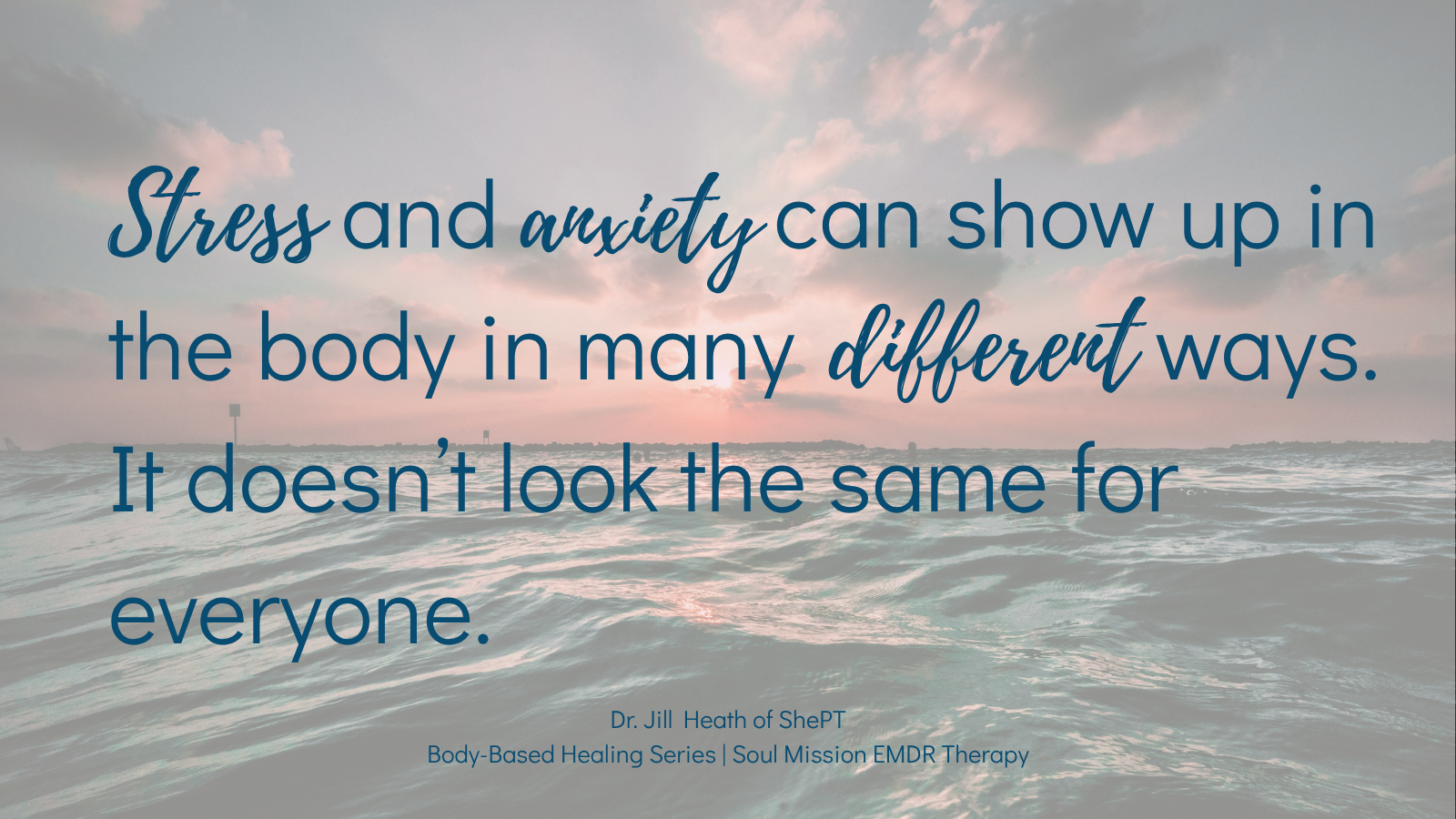
Photo by Silas Baisch on Unsplash
Photo Description: A soft, hazy photo of the ocean at sunset with a pale pink sun glowing near the horizon, scattered clouds, and gently rippling water in the foreground. Navy text reads: “Stress and anxiety can show up in the body in many different ways. It doesn’t look the same for everyone.” The words “Stress,” “anxiety,” and “different” are in a script font. Smaller text at the bottom reads: “Dr. Jill Heath of ShePT. Body-Based Healing Series | Soul Mission EMDR Therapy.”
What kind of services do you provide?
We provide pelvic floor physical therapy for women.
What first drew you to this work, personally?
I was drawn to the field of pelvic floor therapy because it is meaningful and rewarding work. We are making a difference in the most basic functions necessary for quality of life: bladder health, bowel health, and sexual and reproductive health. Helping women through these challenges and supporting them brings me joy.
Who are your favorite types of clients to work with?
My favorite types of clients to work with are those who are frustrated with not feeling like their body is supporting them to do all the things they want to do. Some of our clients feel like they are exhausted trying to keep up with their kids and families because their symptoms are so preoccupying. Some of our clients are not able to be intimate with their partner because of pain. We love to help women connect the dots with what is happening in their body and the path forward to reach their goals.
What happens during a first appointment with you?
In the first visit, we spend the first part talking about what brings them into the clinic. What are their symptoms? What are their goals? We talk about what we will do for the physical examination and come up with a plan together. The physical examination may consist of assessing posture, movement, breathing, areas of tension, and, in some cases, a pelvic floor examination. All parts of the exam are always dependent on the client’s goals and comfort level. We end with providing education and initial tools to get them started with care, and go over the plan for therapy.
What do you wish people knew about services with you?
Pelvic therapy can help with many things. Some of the areas we treat include bladder issues (incontinence and urgency), difficulty with bowel movements, constipation, low back pain, hip pain, pain with intercourse or pelvic exams, and pain or issues related to pregnancy and postpartum recovery.
What’s your experience in how you know that someone in front of you has dissociated from their body, and what do you do differently in that moment?
Signs that I watch for include a change in affect or facial expression, not making eye contact, and a lack of engagement with the therapy or conversation. In that moment, I pause what we are doing and redirect to bring the client back to the present moment.
Is there anything you wish more people understood about how stress or anxiety actually shows up in the body, not just the mind?
I would love for people to know that stress and anxiety can show up in the body in many different ways. It doesn’t look the same for everyone. In the clients we help, it can show up as urinary urgency, pelvic pain and guarding, and GI distress.
If someone reading this has never tried the type of service you provide before and feels nervous about it, what would you want them to know?
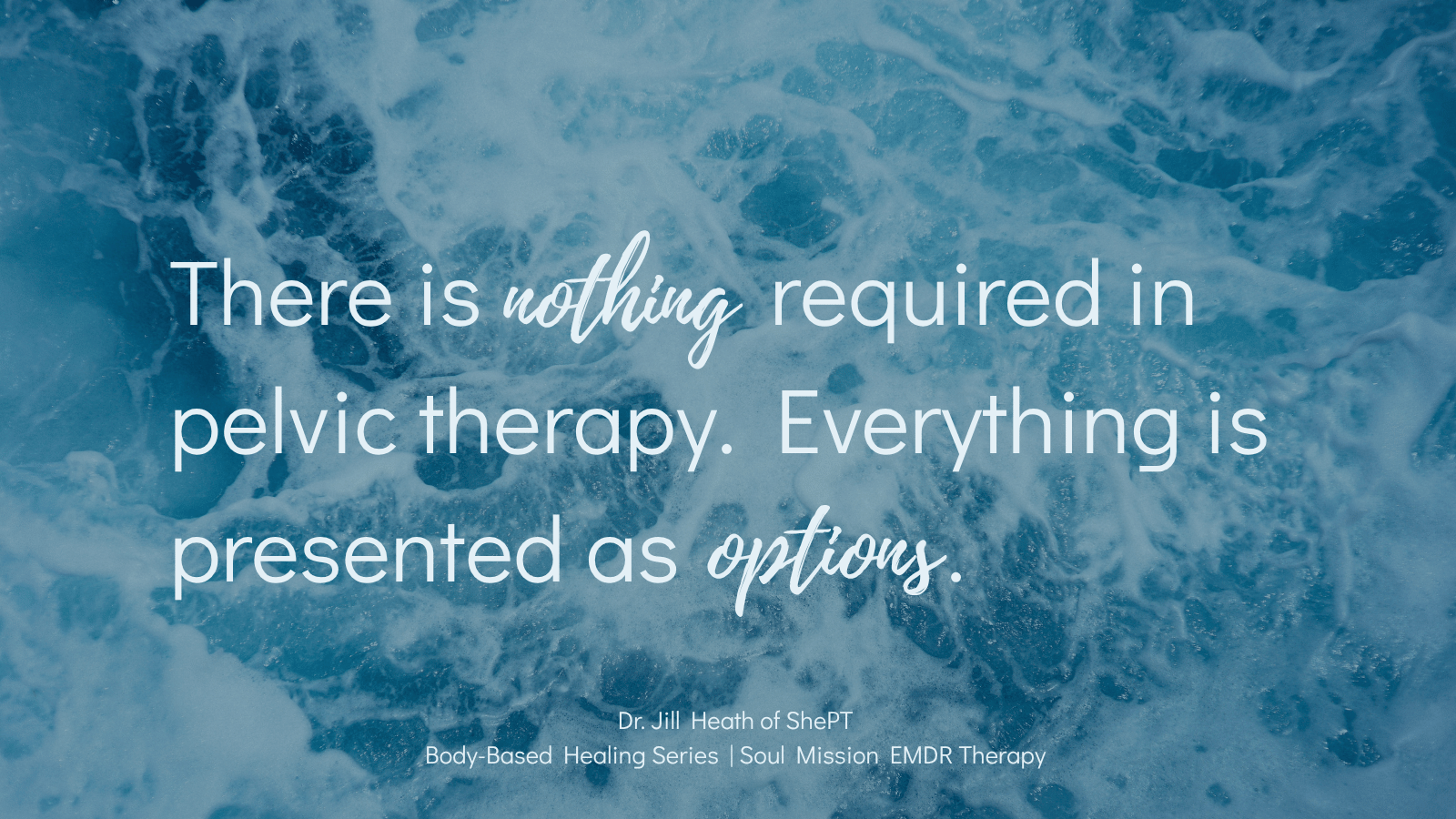
Photo by Christoffer Engström on Unsplash
Photo Description: An aerial view of deep blue ocean water covered in swirling white sea foam. White text reads: “There is nothing required in pelvic therapy. Everything is presented as options.” The words “nothing” and “options” are in a script font. Smaller text at the bottom reads: “Dr. Jill Heath of ShePT. Body-Based Healing Series | Soul Mission EMDR Therapy.”
I would want people to know that there is nothing required in pelvic therapy. Everything is presented as options, and ultimately, what happens in the session is what is important to the client. Sometimes people have heard that pelvic therapy is “invasive,” and I would want them to know that nothing is done in the session without consent. Another thing people might be nervous about is pain. We believe it’s not therapeutic to work through pain. We pay attention to what the body is telling us and do not work through pain.
How do you and other providers work together when someone needs more than one kind of support?
This depends on how the client wants us to collaborate. In some cases, with the client’s consent, we might share what we are learning in pelvic therapy with their other providers so we can work effectively together. Sometimes, if emotions come up in the session, I will suggest that the client share that with their mental health therapist so they can work through that together.
What’s one fun fact about you that most people don’t know?
One of my favorite hobbies is running, and I run outdoors through the summers in Phoenix.
How can people contact you to learn more about your Phoenix, Arizona services?
Our website has most of the information you would need to know: www.shept.co. If you wish to speak with one of our client coordinators, our number is listed on the website, and they are happy to answer any remaining questions or discuss if we are able to help with what you are experiencing.

About Your Host
Kandace Ledergerber, LPC/LMHC, Certified EMDR Therapist
The Body-Based Healing Series features Phoenix providers who help you feel safe and capable in your body again, because healing doesn't only happen in the mind.
Kandace helps adults who feel stuck in the hamster wheel of anxiety and perfectionism reconnect with a sense of grounding, self-trust, and emotional steadiness. Through EMDR therapy and nervous system-informed work, she supports clients in moving out of survival mode and into a more grounded, meaningful life.
She specializes in trauma recovery, anxiety and perfectionism, and healing the lingering effects of childhood and relational trauma. Her work focuses on helping clients process painful experiences that still feel "stuck" so they can move forward with greater peace, confidence, and emotional freedom.
She offers EMDR therapy in Phoenix, trauma therapy, anxiety therapy, and EMDR Intensives.