Hate the Gym? Meet Katie, the Phoenix Movement Coach | Body-Based Healing Series
Photo Description: A three-panel ocean banner with a golden sunset over the water on the left, turquoise ocean and clouds on the right, and a translucent pale pink panel in the center. Navy text in the center reads: “Hate the Gym? Meet Katie, the Phoenix Movement Coach,” followed by “Body-Based Healing Series,” a short coral divider line, and “Featuring Katie Wilson of Your Strength Movement Coaching. Hosted by Kandace Ledergerber, LPC/LMHC.”
Photo by Sean Oulashin on Unsplash
Welcome to the Body-Based Healing Series, where I feature a different Phoenix provider who understands that your body is a huge part of the equation when it comes to mental health and trauma. These providers get that your body often holds what your mind can’t process. I talk a lot about how trauma doesn’t only live in memory; it lives in the body, too. That’s the heart of the work I do in EMDR Therapy Phoenix, and it’s why I’m so excited to have gotten to know these providers and share them with you. Because when you get the chance to feel safe in your body again, in different spaces and in different ways, that’s where your brain can really start building new neural connections that stick.
So without further ado, please allow me to introduce you to Katie Wilson of Your Strength Movement Coaching!
Why did you decide to open your business in Phoenix, Arizona?
Well, as far as the location goes, we live here! 😊 But the bigger reason was that it was time for a change. After years of working in dental hygiene, I knew I needed to step away from the profession. I was experiencing chronic tension migraines, persistent fatigue, and numbness and tingling in my hands and fingers. My own health was suffering, but what weighed on me most was the growing frustration of feeling like I couldn’t always do what was best for my patients.
I saw firsthand how much insurance companies influenced healthcare decisions. When a procedure wasn’t approved, patients often chose not to move forward because of the out-of-pocket expense. Sometimes, they also assumed that if insurance wouldn’t cover something, it must not be important for their health. It was difficult to watch financial barriers and insurance policies interfere with the care people needed. I also struggled with the increasing corporate emphasis on production quotas and numbers.
I wanted to make recommendations based on what was best for each individual patient, not feel pressured by business targets that didn’t always align with their needs.
Over time, I realized I wanted to take a different approach to health and wellness, one that gave me the freedom to put people first, look at the bigger picture, and help individuals feel better in their bodies. For me, it was never just about leaving one career for another. It was about finding a way to help people that felt more aligned with my values: listening, educating, building trust, and supporting the whole person.
What kind of services do you provide?
Photo Description: A close-up of a deep teal-blue ocean wave with rippled texture and white spray in the upper right corner. White text reads: “Just because you can shove it from the front of your mind doesn’t mean it’s not showing up in your body.” The words “shove,” “mind,” and “body” are in a script font. Smaller text at the bottom reads: “Katie Wilson, Your Strength Movement Coaching. Body-Based Healing Series | Soul Mission EMDR Therapy.”
Photo by Silas Baisch on Unsplash
I offer a blend of strength training and movement coaching that looks beyond the workout itself. My approach incorporates breathing, mobility, strength, body awareness, and developing a positive relationship with movement that supports long-term health, independence, and longevity.
I believe movement should be a tool for feeling better, building confidence, and improving quality of life, not a way to punish ourselves for what we eat or how our bodies look. Fitness doesn’t have to be about getting smaller or pushing harder. It can be about getting stronger, moving with greater ease, maintaining independence as we age, and feeling more capable in everyday life.
I created Your Strength Movement Coaching to be a place where people are met where they are, receive individualized support, and work toward better health without pressure, judgment, or a one-size-fits-all approach. Whether you’re new to exercise, returning after an injury, navigating changes that come with aging, or simply looking for a more sustainable approach to fitness, my goal is to help you find movement that works for you and your life.
Currently, I offer in-person private and split sessions, which allow me to provide personalized coaching while helping clients build strength, confidence, and consistency at a pace that feels right for them. I’m also working on expanding my virtual offerings so I can make this approach to movement and wellness more accessible to people beyond our in-person sessions. My goal is to create more opportunities for people to receive guidance, support, and accountability wherever they are.
Ultimately, I want to help people build a foundation for lifelong health, one that goes beyond exercise and supports the way they feel, move, and live every day.
What first drew you to this work, personally?
I didn’t always love movement. In fact, I failed P.E. in high school! I didn’t start seriously lifting weights until dental hygiene school, but once I did, I fell in love with it. For the first time, I had found something that genuinely interested me. I wanted to learn everything I could. I read every fitness magazine article I could get my hands on (back when we still had magazines!), and as the internet was just beginning to take off, I searched for every bit of information I could find.
But as I spent more time in the gym and learned more about fitness, I started noticing something that bothered me. I kept hearing people, especially women, talk about negative experiences in gym settings. I noticed how often the conversation around fitness focused on appearance rather than the things that actually required dedication: showing up, learning something new, putting in the time and effort, and building strength over time. As the internet grew, the fitness industry exploded, but not necessarily in a way that made movement more accessible or welcoming. So much of the messaging seemed to suggest that if you weren’t an elite athlete, spending hours in the gym, following a particular diet, or doing the latest must-have exercise, you weren’t doing enough. You weren’t good enough.
Photo Description: A soft-focus beach scene with a pale blue sky, a band of turquoise ocean, and white sea foam and water droplets splashing across the foreground. Navy text reads: “Movement should be something we get to do for ourselves, not something we feel we have to do to prove we’re good enough.” The phrases “get to do” and “have to do” are in a flowing script font. Smaller text at the bottom reads: “Katie Wilson, Your Strength Movement Coaching. Body-Based Healing Series | Soul Mission EMDR Therapy.”
Photo by Kinø on Unsplash
In the early days, I rarely saw content focused on helping everyday people get started with movement. There was even less support for people who had a history of injuries, felt intimidated by exercise, or actually felt worse after working out. I also began to notice how often women’s training was approached exactly like men’s, without much consideration for differences in starting strength, training experience, individual needs, or the physical changes women experience throughout their lives. And then there were the uncomfortable, sometimes downright inappropriate experiences women faced in gyms: being stared at, criticized, or even touched by strangers who decided they were doing an exercise incorrectly.
As I began coaching more and listening to my clients share their experiences with gyms, personal trainers, and fitness in general, I became increasingly frustrated. I knew movement could offer people so much more than what the industry was often selling, and I was determined to do things differently. I wanted people, especially women, to experience the same kind of freedom and possibility that strength training had given me. Strength training helped me discover what my body was capable of. It gave me a sense of connection between my body and mind, helped me build confidence, and gave me time that was entirely my own, not for anyone else, not to meet someone else’s expectations, and not to change how I looked for other people.
I wanted to help other women experience that, too. I wanted them to feel that they had permission to move, learn, experiment, and discover what worked best for their own bodies and minds. That means recognizing that we’re all starting from different places. We have different histories, abilities, preferences, challenges, and goals. Not everyone loves lifting weights, and that’s okay! The goal isn’t to force everyone into the same workout or convince them to love a particular style of exercise. It’s to help them discover forms of movement they genuinely enjoy, feel good doing, and can continue throughout their lives.
That’s what continues to draw me to this work. I’m not interested in helping people punish their bodies into looking a certain way. I’m interested in helping people build a better relationship with their bodies, discover what they’re capable of, and find ways to move that support their health, confidence, and independence for years to come. Because movement should be something we get to do for ourselves, not something we feel we have to do to prove we’re good enough.
Who are your favorite types of clients to work with?
My favorite clients are those who have had a negative experience with traditional fitness. Clients who have a history of injury, post-surgery, or post-joint replacement. In general, I prefer to work with women over the age of 45, and I absolutely love working with women in their 50s to 70s, especially the ones who are seeing the changes in their bodies and are focused on living a long, full life that includes maintaining independence and capability for their families and community. Many of my clients affectionately call themselves a part of the Land of Misfit Toys :)
What happens during a first appointment with you?
Ideally, we have our first chat by phone so we can both get a feel for each other and you get to ask a lot of questions. Based on that call, I have you come to one of my locations to see the space and meet me in person to ask more questions about me and the space and tell me things that you think are important to your journey.
I believe in vibes; I believe in the central nervous system and its reaction. If a space feels scary or overwhelming, it’s probably not a good fit for you. If I feel scary or overwhelming, I’m probably not a good fit for you. There is a lot of novelty in starting something new, with a new person, in a new place. So the goal of our first in-person meeting is to check in with what you are experiencing. After we have decided to work together, we will go through a movement assessment and talk more about what you need and want. From there, I build you a training plan and share it with you, the goal being that you get a say about how, what order, and what we focus on first.
What do you wish people knew about services with you?
This is about you and for you. Starting services with me is all about helping you find YOUR STRENGTH. What do you need, what are you looking for, what do you enjoy, what do you dislike, what makes you feel safe, what makes you feel in danger? I have ideas, I have knowledge, but I am only your guide, I am here to introduce you to different styles, approaches, techniques, and modalities, not to tell you the way that I do things for myself or other clients is the way you should do it.
What's your experience in how you know that someone in front of you has dissociated from their body, and what do you do differently in that moment?
Photo Description: A soft, washed-out photo of gently rolling ocean water in pale blue and gray under a light peach sky. Navy text reads: “Dissociating or struggling with an activity isn’t a moral conversation, it’s a message from your body and mind.” The words “Dissociating,” “message,” “body,” and “mind” are in a script font. Smaller text at the bottom reads: “Katie Wilson, Your Strength Movement Coaching. Body-Based Healing Series | Soul Mission EMDR Therapy.”
When I see someone has shifted out of the present or is having a hard time with an activity, we shift. Sometimes that means we stop, sometimes that means we slow down, sometimes that means we talk it out, sometimes that means we lie on the floor and breathe, sometimes it means we do a different activity. What we focus on is what you can do in that moment instead of focusing on what’s not going well. Dissociating or struggling with an activity isn’t a moral conversation, it’s a message from your body and mind. My job is to help you interpret that message.
Is there anything you wish more people understood about how stress or anxiety actually shows up in the body, not just the mind?
Your brain is magic, but it is also extremely powerful; just because you can shove it from the front of your mind doesn’t mean it’s not showing up in your body. From heart rate to muscle tightness to posture to feeling uncoordinated, the body holds what you can’t address. Movement is one of the ways your body can learn to offload stress and anxiety, but also learn how to better manage it. Stress and anxiety aren’t likely to go away, but helping your body learn to better manage the symptoms can help your mind clear and settle into a calmer state.
If someone reading this has never tried they type of service you provide before and feels nervous about it, what would you want them to know?
You are in charge, and I work for you. I love the questions. I adore when people, especially women, are suspicious of how I can actually help them, especially if they have been told multiple times that someone can “fix” them. I want to introduce them to the idea that there is nothing wrong with them, but instead that movement is an opportunity to live a life full of the things you value and age with confidence and ability.
How do you and other providers work together when someone needs more than one kind of support?
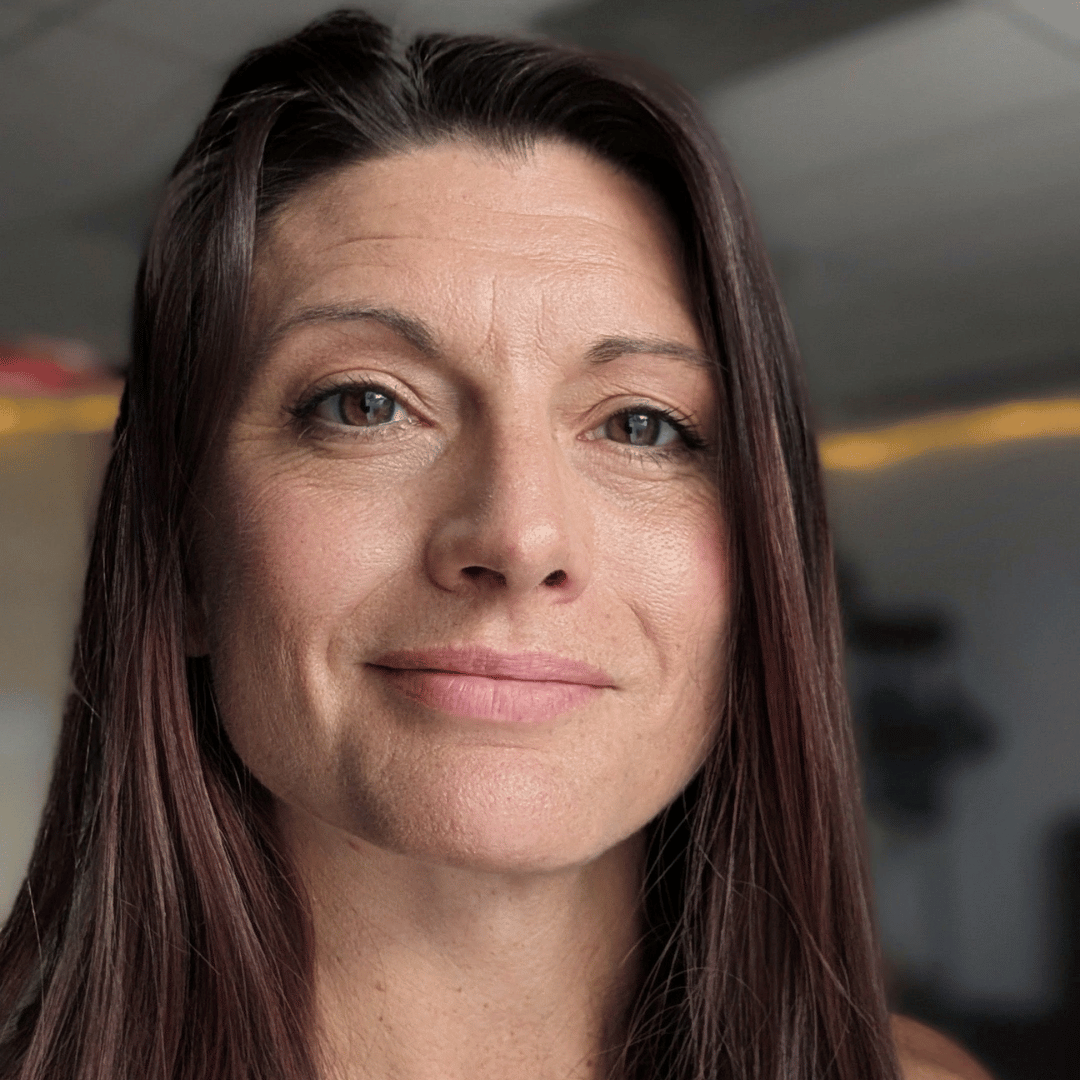
Photo Description: A close-up headshot of Katie Wilson of Your Strength Movement Coaching. She has long, straight dark hair with auburn tones, brown eyes, and a warm, closed-lip smile, and she’s wearing a gray sleeveless top. The background is a softly blurred indoor space with a white tiled ceiling and warm lights in the distance.
Communication, always communication. Ideally, we have a blend of phone and email to stay up to date on what our client needs and is experiencing. I try to match the language of the other provider or provide clarity on language and information that the other provider is giving, helping the client connect the dots between our kinds of services and how they complement each other.
What’s one fun fact about you that most people don’t know?
I will stand outside by my pool and watch for bees to rescue when they fall in the pool! And I am an absolute sucker for rescue dogs, especially pit bulls and all the big breeds.
How can people contact you to learn more about your Phoenix Arizona services?
Email Katie@yourstrengthaz.com or visit www.YourStrengthAZ.com
About Your Host
Kandace Ledergerber, LPC/LMHC, Certified EMDR Therapist
The Body-Based Healing Series features Phoenix providers who help you feel safe and capable in your body again, because healing doesn't only happen in the mind.
Kandace helps adults who feel stuck in the hamster wheel of anxiety and perfectionism reconnect with a sense of grounding, self-trust, and emotional steadiness. Through EMDR therapy and nervous system-informed work, she supports clients in moving out of survival mode and into a more grounded, meaningful life.
She specializes in trauma recovery, anxiety and perfectionism, and healing the lingering effects of childhood and relational trauma. Her work focuses on helping clients process painful experiences that still feel "stuck" so they can move forward with greater peace, confidence, and emotional freedom.
She offers EMDR therapy in Phoenix, trauma therapy, anxiety therapy, and EMDR Intensives.