Go to Therapy, They Said: How Healing Changes Your Relationships (And Why Not Everyone Will Love It)
Photo Description: A blog header graphic with a deep blue center panel framed by aerial ocean photos: white sea foam washing over sand on the left and textured turquoise water on the right. White text reads "How Therapy Changes Relationships When You Start Saying No," followed by a light pink divider line and the byline "By Kandace Ledergerber, LPC/LMHC, Certified EMDR Therapist."
Photo by Shifaaz shamoon on Unsplash
You finally did it. You finally said no and stood your ground. Your hands probably felt clammy and your heart was probably beating a mile a minute, but you did it! As someone who provides EMDR therapy in Phoenix to perfectionists and people-pleasers, and from many years of practice, I know how hard this can be and how much it can throw your brain and body for a loop.
But then something happens in the conversation that you thought might happen. But you were hoping, down to your bones, that it was just another "what if" on an anxiety spiral. The person on the other side of that no pushed back. They might have said something offhand that was meant to sound like a joke like "Oh you go to therapy and now all you can do is say no, huh?" or "You start working on yourself, and you just have to say no to everyone now." But the message is the same - You're drawing a boundary and it sucks for me and I'm going to make sure you know about it.
Go to therapy, they said. It'll be fun, they said… Honestly I don't really think anyone has said this about going to therapy, but you get the point. Therapy was supposed to fix the problem, working on yourself was supposed to make this shit easier, and yet here you are panic scrambling (I'm guessing) to figure out how to respond. Saying no was supposed to be the hard part and now here is you were hoping would only come up in your anxiety spirals.
First, let's pause and take a breath. Second, please know that this feeling is normal. And to a certain extent, what happened in that conversation is normal too. In this blog, I'm going to break down both and what you can actually do about it, both before and the next time you say no, because I really hope you take another crack at it.
Key Takeaways
Our brains build relationships around patterns, many of them learned early to keep the peace and stay safe and connected. Those patterns can change.
When you start saying no, some people will do a double take because their usual programming got interrupted. In most healthy relationships, though, a no is met with a big fat nothing.
Someone else's discomfort doesn't mean you did something wrong. Your no is still a complete sentence.
Healthy relationships are like bridges that can hold weight in both directions. Branch relationships start to creak and crack once you stop carrying everything.
Grounding your body before and after a hard conversation, along with the boundary sandwich, makes your no easier to say and easier to hold.
When EMDR Starts Changing Your Patterns
So the first piece I want to address is the fact that our brains build our entire world and relationships around patterns. It's the mental shortcut our brains like to take, because we have so much information coming in (especially in this day and age) at any given point in time. So growing up, as you are organizing information and learning from the people around you, you likely gained patterns that were supposed to unfold.
Even in the most healthy homes, unhealthy patterns can come up, because we're human. And if an adult is not aware of those patterns and helping us organize and integrate our role in them, we tend to adopt whatever role will create the most peace, safety and connection. This is because as human beings, we need safety and connection to other human beings. This is rooted in our biology, and in our brains, it's a survival need as big as food, water and shelter.
So we learn really quickly what patterns we need to follow and which to avoid so we can ensure safety and connection or at the very least avoid isolation. But here's the great thing: our relational patterns, while they may have formed as maladaptive, can be changed and altered to be healthier and actually fit the lives we are trying our damnedest to build. That's the exact work I do as a therapist!
I work with high-achieving perfectionists and people-pleasers who typically have trauma from their childhood and/or other areas of life, who are sick of these patterns running their lives and want to start really living and engaging with their life from choice. We work as a team to develop strategies to help them feel more grounded through the week and we work to re-process past trauma with EMDR and Brainspotting, so their brains can change the patterns they've been stuck in.
Why Change Is Uncomfortable for Everyone Involved
Your relationships were built around the old you
So here's the tough part: your relationships were built around your old behavior and the old pattern. People are used to it. They're probably used to you saying yes, making it work and figuring it out. They don't see the work it takes you on the back end or the toll it takes on you to constantly say yes.
So in one sense, for most relationships, it's understandable why some people would do a double take when you start saying no. This, however, is not a license for people to treat you like dirt because you have started to say no. That is not okay under any circumstance.
Their discomfort doesn't mean you're doing something wrong
Their discomfort doesn't mean you have necessarily done something wrong. They might be uncomfortable because there's been a shift in their typical scheduled programming. But that doesn't mean you have to say yes. Your no is still a complete sentence.
It also makes sense that it is possibly quite a bit easier for you to "keep the peace" and just say yes. Or double back and take your no back. But I want to pause here and reassure you that it isn't necessary. You are allowed to say no. And in fact, in most healthy relationships, when you say no, you know what typically happens on the other side? A big fat nothing.
That's right. In most relationships, most people will say "Huh, okay cool I'll figure it out."
Now, if they don't, they're not necessarily villains. And I would also encourage you to notice what other red or green flags show up in this relationship and work with a trusted friend, life coach or therapist to work through keeping that no in those tough relationships.
Why Some People Dance Around EMDR
Photo Description: A quote graphic over a soft blue sky with blurred white clouds and a turquoise sea, with water droplets splashing across the lower half. Dark navy text reads, "In healthy, safe relationships, using our words is how the bridge gets built." The words "safe" and "built" are in script emphasis typography. The quote is attributed to Kandace Ledergerber, LPC/LMHC, Certified EMDR Therapist.
Photo by Linus Nylund on Unsplash
And here's the piece I see so often: people come in ready to do the work. They've read about EMDR and are ready to take down these patterns that have run them ragged and sucked the life out of everything.
And then something kind of funny happens.
Week after week they come in with these "small fires" that take over the session and inevitably (almost always) those fires trickle back to the reason that they came in … those initial patterns. But people will dance around it because EMDR can feel scary. The process itself is different from talk therapy (if you're curious what it actually looks like, my complete guide to EMDR therapy walks through it), and while they want the change - change is scary and unnerving to everyone, both the person we're saying no to and ourselves.
This fear is normal and totally understandable. And if anything, as an EMDR therapist, I encourage us to work with that fear, because it's still a part of the process.
It's okay to be nervous and it's okay to show up anyway, even if all we're doing is sitting with and allowing space for that fear.
The Splintered Branch and the Bridge
The other week in session, this analogy came up and honestly it felt too good not to share. The analogy is this - a relationship can be a bridge or a branch. Technically they are both made out of the same substance, but one is substantially more sturdy. A bridge is designed to be traveled on (both ways), whereas a branch will most likely snap if you try to put any real weight on it.
Relationships that are healthy, that can bounce back and adapt when the other person goes through changes or grows, I consider to be a bridge. These are the relationships that can either adapt to the fact that there's now a boundary in the relationship or are fine with it from the start.
Relationships that feel more branch-like are the ones that, when you put more weight on them than they're designed to carry, start to creak and eventually splinter and crack. In the relationship this can look like you saying yes, when you really want to say no, and when you start to say no, the weight of that now starts to create pressure on the branch.
In either case, there isn't anything inherently wrong with saying no or drawing a boundary. It's the structure that is either meant to hold the weight or not.
Now, this blog isn't about cutting everyone off (unless, of course, they're truly harmful), but if you find yourself with more branches than bridges and the people on the other end are unwilling to build with you, maybe it's time to lessen contact in a way that supports you connecting with more bridge relationships.
People Aren't Mind Readers (Use Your Words)
Photo Description: A quote graphic over a soft blue sky with blurred white clouds and a turquoise sea, with water droplets splashing across the lower half. Dark navy text reads, "In healthy, safe relationships, using our words is how the bridge gets built." The words "safe" and "built" are in script lettering. The quote is attributed to Kandace Ledergerber, LPC/LMHC, Certified EMDR Therapist.
Photo by Kinø on Unsplash
This is a tough one for my people-pleasers in the front… because, let's be real, you probably wouldn't be in the very back (but might pick a nice middle chair ;)). If this is you, I'm willing to guess you've spent A LOT of years forming this pattern to keep the peace in social situations so the room doesn't explode, so it's only natural you are used to reading the room and predicting what everyone might need at any given moment.
It's understandable then that you would presume others are doing the same. But here's the thing, a lot of times, they aren't. This pattern was built on years of walking on eggshells and is a defense mechanism some people never had to develop.
This means that, as sucky as it is, in those situations, we have to pull on our adult-people pants and use our words. Which can be really freaking uncomfortable. But I will say that in healthy, safe relationships, using our words is how the bridge gets built. And if you find that your inner critic is judging the hell out of you for needing to speak up and ask for help, try picturing that inner critic as an actual person in front of you, and tell them this decision isn't theirs to make.
Get grounded before the conversation
So what do we do to have this conversation? First, we want to start by grounding and regulating our body, because more than likely the idea of having this conversation feels dangerous (remember our human biology needs connection and safety as much as it needs food and shelter?). If you've ever wondered why your nervous system can't just calm down on command, this is a big part of it. So take a few minutes, notice what's happening in your body and take 5-10 deep breaths, making your exhale longer than your inhale. And if you want a little more support than a few deep breaths, I have a 10-minute grounding exercise you can use before (or after) these conversations to help your body remember it's safe.
Try the boundary sandwich
Here is a skill that I have used dozens of times and teach my clients all the time. It's called the boundary sandwich. You layer in a positive, the boundary and another positive or action moving forward.
It sounds like this - "Hey, I really appreciate your friendship, but I do have to say no to hosting again this year. I'm just too exhausted with everything going on. I'd love to bring a dessert though for wherever our circle of friends decides to meet up."
The end. That's it. You don't have to launch into a million reasons why to reassure yourself that it's okay to say no. And you don't have to convince them. Your no is enough just as it is.
And after you've done that, take a few minutes to notice what happened in the room and in the relationship, and then regulate again, taking another 5-10 deep breaths. If you want to go deeper, I walk through this step by step in my guide to setting boundaries as a trauma survivor.
When Someone Doesn't Like the New You
Photo Description: A quote graphic over a cresting ocean wave, with soft pink and gray clouds above it in muted blue tones. Dark navy text reads, "In either case, there isn't anything inherently wrong with saying no or drawing a boundary. It's the structure that is either meant to hold the weight or not." The words "saying no" and "structure" are in script lettering. The quote is attributed to Kandace Ledergerber, LPC/LMHC, Certified EMDR Therapist.
Photo by Silas Baisch on Unsplash
So in most cases when you put a boundary in place or say no, people will respect it. But what about the times when people push back and maybe even get hurtful because of it? There are relationships that are abusive, and if you are in one of those, there's help on your terms. The National Domestic Violence Hotline is available 24/7 at 1-800-799-7233. There are also relationships that give a flavor of that toxicity that could grow to be a bridge, but may continue to be a branch.
So what do we do with this branch? You do not have to continue balancing on it. You can choose to see their pushback as theirs, and as information to file away. You can choose to continue offering opportunities to accept the boundary until you are at a place where the boundary has to get bigger.
Other times, once people have had some time to adjust, they may actually start building a bridge with you, albeit one tiny branch at a time. But if someone continues to push back to the point that it's hurtful, it's a good thing to pay attention to and make the right decision for you.
This is also where talking with a trusted friend or therapist can help, as they can help you see the bigger patterns at play and help you stick to the boundaries you set out to keep. The important part is that the person on the other end of this is trying to meet you halfway rather than continuing to ask you to do most of the work.
You Don't Have to Build Every Bridge Alone
Building new relational patterns is tough work, but you don't have to do it alone. It can be so helpful to do this with a therapist who can see from the outside of these relationships, help you identify patterns and discuss what is healthy or unhealthy. EMDR therapy is especially helpful for untangling where these patterns came from so your brain can process them and move on to more adaptive, accurate ways of viewing your role and other people's roles in the relationships.
If you are looking for an EMDR therapist and you are in Arizona or Florida, I currently have openings for 90-minute sessions and 3-hour intensives. You can schedule a free consult call to figure out if this might be a good fit for your next steps in your healing journey.
I hope that you continue to set boundaries and say no in spaces that support you in exploring this.
TL;DR
Saying no shakes up patterns everyone got used to, including you.
Pushback tells you something about the other person. It isn't proof you messed up.
Bridges hold weight both ways and branches crack, so notice which ones you're leaning on.
Take a few slow breaths with longer exhales, then try the boundary sandwich: a positive, the boundary, and another positive.
You don't owe anyone a list of reasons. Your no is enough just as it is.
About the Author
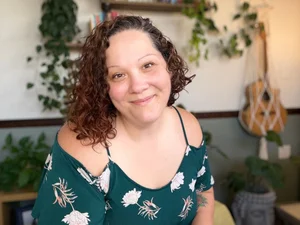
Kandace Ledergerber, LPC/LMHC, Certified EMDR Therapist
Kandace helps adults who feel stuck in the hamster wheel of anxiety and perfectionism reconnect with a sense of grounding, self-trust, and emotional steadiness. Through EMDR therapy and nervous system-informed work, she supports clients in moving out of survival mode and into a more grounded, meaningful life.
She specializes in trauma recovery, anxiety and perfectionism, and healing the lingering effects of childhood and relational trauma. Her work focuses on helping clients process painful experiences that still feel "stuck" so they can move forward with greater peace, confidence, and emotional freedom.
She offers EMDR therapy in Phoenix, anxiety therapy, and EMDR Intensives.