

Ketamine Therapy Phoenix
KA-EMDR™ for Trauma
Ketamine-Assisted EMDR in Phoenix: Opening the Door Your Defenses Kept Closed
You have done the work. You have shown up in therapy, learned the coping skills, tried to do everything right. And still, there are moments when your body is completely consumed by panic and you cannot even figure out why. In those moments, talking about it gets you nowhere. You do not need more words. You need to feel like you can breathe.
You keep going back to therapy, breathwork, journaling, and deep work. Because part of you knows you are right on the edge of something. You can feel it. And then, before you can even think about it, your defenses go up and you hit a wall. Suddenly you are spending half the session just trying to explain what you are trying to say in the right way, searching for the words that will finally make it make sense or poking around new coping skills that might help you manage that sense of panic. And that edge of understanding and revelation slips away again.
You hate this. You hate living in this. Not because you haven’t tried. But because you have tried so freaking hard, for so long, and it still has not been enough to make the past stay in the past where it belongs.
You are not looking for another coping skill. You are looking for something better.
For some people, that something is ketamine therapy in Phoenix, paired with the trauma work that talk therapy couldn't reach.
What Is Still True
You kept coming back. Even when the work felt like circling the same drain, even when your defenses showed up before you could stop them, even when the words never quite captured what was happening inside your body, you did not stop looking for a way through.
And that matters.
The fact that you are here, reading this, means the part of you that knows something better is possible has not given up. That part is right.
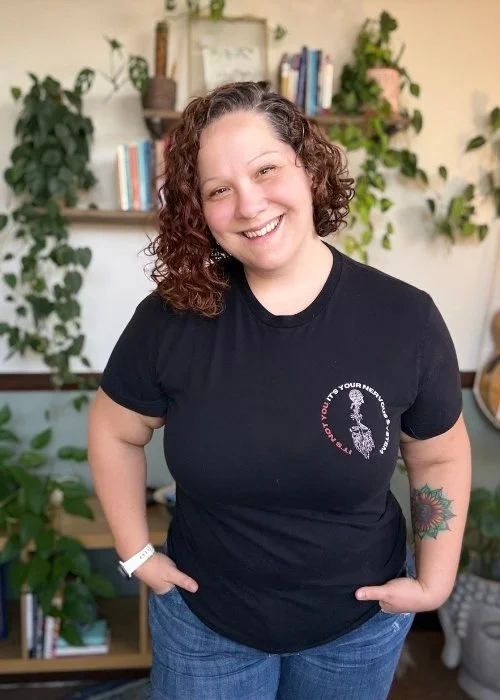
I'm Kandace Ledergerber, a Licensed Professional Counselor and EMDR Certified therapist in Phoenix, Arizona. I offer ketamine-assisted EMDR therapy for people who have already tried therapy, already learned the skills, and are still living with a nervous system that will not settle down.
My approach is direct. I help people deal with the past sh*t that won't stay in the past, so they can stop white-knuckling through life while their nervous system is on fire. I've watched it happen again and again: someone who's ready finally finds the right approach for them, and the fire starts to go out.
I work with people who are exhausted by their own resilience. The ones who have read the books, done the breathing, sat across from a therapist and maybe even a life coach too, and tried to find the right words, and still feel the panic rising in their chest without warning. The ones who can feel that edge of understanding in a session and watch it slip away before they can get there. Those are my people.
What I know is this: the body holds what words cannot reach. Talk therapy works for a lot of things. But when the nervous system itself is the problem, when the past is living in your body and not just your memory, talking about it has real limits. That is not a failure of your effort or that of your therapist. It’s a limitation of the tool. It may just be that you need a different tool.
What Is Ketamine-Assisted EMDR Therapy in Phoenix?
EMDR, Eye Movement Desensitization and Reprocessing, is a structured, evidence-based therapy that helps the brain reprocess traumatic memories so they lose their grip on your nervous system. It doesn’t require you to talk through every detail of what happened, but works with your brain and your body to help you work through those memories. It does this because it works with how the memory is stored in the body, not just what you remember consciously.
Ketamine-assisted EMDR pairs that process with a low-dose ketamine session to help quiet the parts of the nervous system that go on high alert the moment you get close to the hard material. For people whose defenses activate before they can get to the work, this combination can open a window that talk therapy alone (and sometimes even EMDR alone) has not been able to reach,
In EMDR work, clients often describe a shift in how the past feels. Not erased, not forgotten, but no longer in the driver's seat. That is the work. Not coping, but actual change in how the memory feels to your body. Ketamine can give your body and brain enough room to slow down, so you can reach the material in a softer, more real way.
How KA-EMDR™ Is Different From Other Ketamine Therapy in Phoenix
Not all ketamine therapy is the same. The setting, the structure, and who is in the room with you make a significant difference in what becomes possible and what the goal is in the session. Here is how the most common approaches compare.
IV Ketamine Infusions
IV ketamine infusions are administered in a medical clinic, typically by an anesthesiologist or psychiatric provider. The dose is higher, and the experience is more dissociative. While some people find relief from depression and suicidal ideation through infusions, the sessions are medically focused. There is typically no therapist present to guide the processing of trauma, and integration support varies widely depending on the clinic. The core focus of these sessions tends to be internal resting while the medication works through the body.
At-Home (Or In-Office) Ketamine Troches
At-home ketamine troches are small dissolvable tabs, prescribed through telehealth platforms and taken without clinical support present. This model increases access and reduces cost, but it means you are navigating the experience alone. Without a trained therapist guiding the session, the opportunity to process trauma in real time is largely lost.
KA-EMDR™: Your Therapist in the Room
Ketamine-assisted EMDR is different because the therapeutic work happens during the ketamine experience, not after it. You take a sublingual troche at the start of the processing, and your therapist is with you the entire time. As the ketamine lowers the nervous system's defenses, you engage in the EMDR process with the therapist. This means that you are in the midst of processing when ketamine takes full effect, lowering defense mechanisms and typically allowing clients to more easily access trauma reprocessing in a more effective, comfortable way. This is not ketamine as a standalone treatment. It is ketamine as a key that unlocks the door so the real work can happen.
What’s the Difference Between KA-EMDR™ and KAP?
While both Ketamine-Assisted Psychotherapy (KAP) and Ketamine-Assisted EMDR (KA-EMDR™) pair ketamine with therapy to promote neuroplasticity and emotional openness, they differ in structure and how the medicine is used. Traditional KAP typically uses higher doses for an inward, non-directive journey, where the therapist holds supportive space and helps you integrate insights afterward. In contrast, KA-EMDR™ uses lower, carefully calibrated doses so you stay present enough to actively reprocess specific traumatic memories using bilateral stimulation. Essentially, ketamine quiets the brain's fear response and softens rigid defenses, allowing EMDR to gently and effectively resolve stuck trauma in real time without overwhelming your nervous system.
Who Ketamine Therapy in Phoenix Is Right For
This kind of trauma work may be a good fit if you have tried talk therapy and feel stuck, if your nervous system activates before you can get close to the material, or if you have a history of trauma, anxiety, or PTSD that has not fully responded to other approaches. It might not necessarily be the first step, but it might be the step that makes the other pieces click into place.
This kind of ketamine therapy isn't the right fit for everyone, and a careful screening is part of what makes it safe. Your prescribing provider will look at your full medical and mental health history before you start. Some conditions may mean ketamine isn't a good option right now, or that it needs extra care. These can include uncontrolled high blood pressure or certain heart conditions, a history of psychosis or mania, pregnancy, or current substance use. None of these automatically rule you out of trauma work. They just mean we may take a different route, and standard EMDR is always available.
What to Expect From Ketamine Therapy in Phoenix, Step by Step
Medical Screening and Your Prescription
I don't prescribe or provide ketamine. That part of your care happens with a licensed medical provider who does a full medical evaluation, decides whether ketamine is safe for you, and, if so, prescribes the troche and in what amount they feel is most appropriate. I work with prescribing providers here in the Phoenix area and can point you to one who understands this protocol. The prescriber oversees the medical side throughout your treatment, and the evaluation and prescription are billed by the provider separately from your therapy sessions.
Preparation Sessions
Before ketamine enters the room, we build the foundation. Preparation sessions give us time to map out what we'll be working on, practice the resourcing and grounding skills you'll lean on during reprocessing, if need be, and make sure your nervous system has somewhere steady to land. This is also where we talk through what the ketamine experience feels like so you feel prepared. Most clients need 2-3 preparation sessions, though it depends on your history and how familiar you already are with EMDR and how quickly you feel comfortable with me as a therapist. If you've already done EMDR with me, this part typically moves faster.
Your Session: Troche, Then EMDR
At the start of the session, you place the troche under your tongue and let it dissolve, following your prescriber's directions. I'm with you the whole time. Over the next 45 to 60 minutes, most people notice a softening: the body relaxes, the usual guardedness eases, and the material that normally sends your system into high alert feels more approachable. The dose is low enough that you stay awake, alert, and able to talk with me. Once you're in that window, we move into EMDR reprocessing, using the same bilateral stimulation and targets we planned during preparation. The ketamine doesn't do the work for you. It widens your window of tolerance so your brain can do what it already knows how to do, which is take a stuck memory and file it where it belongs.
Integration After Each Session
Reprocessing stirs things up, and integration is how that movement turns into lasting change. We leave time at the end of each session to come back fully into your body, notice what shifted, and make sure you leave feeling grounded. Between sessions, I'll give you simple ways to keep tending to what came up, whether that's journaling, a regulation practice, or just noticing what feels different in your daily life. Insights from a ketamine session can feel big in the moment and fade quickly if they aren't anchored, so we bring them into the next session and build on them. Integration is where the new story starts to feel like yours.
Is It Safe?
Sublingual ketamine used in a therapeutic setting is considered low-risk when properly screened and clinically supported. It is not the same as recreational ketamine use. The doses used in this kind of ketamine therapy are psycholytic, meaning you remain conscious and present throughout the session. You are not sedated, and you are not alone. Like any medication, ketamine can have side effects. These may include nausea, headache, dizziness, blurred vision, mild dissociation, feeling more emotionally sensitive, or a temporary rise in blood pressure and heart rate. They are typically mild and short-lived, and because I'm with you the entire time, you have support if anything feels uncomfortable.
It's also worth knowing that this approach is newer. Early research is promising, but larger studies are still needed, and this treatment isn't the right fit for everyone. That's why a thorough medical and psychological screening comes first. Your prescribing provider will help you weigh the benefits and risks so you can make the decision that feels right for you.
Why Sublingual Instead of an IV?
Sublingual ketamine produces a gentler, more therapeutically workable experience than IV infusions. The onset is slower, the dissociation is milder, and the window it creates is long enough to do meaningful EMDR processing without being so intense that it interferes with the work. It is also more accessible, since it does not require a medical facility or anesthesia provider. For trauma-focused therapy, sublingual is often the better fit precisely because the goal is not sedation. The goal is a nervous system that is calm enough to stay present.
Cost of Ketamine Therapy in Phoenix
KA-EMDR™ sessions with Soul Mission EMDR Therapy are offered in two formats depending on your needs and goals.
90-minute weekly sessions are $338. These are well-suited for clients who want to integrate this type of approach into an ongoing weekly rhythm, moving through material steadily over time, and are offered virtually.
3-hour intensives are $675. Intensives allow for deeper processing in a single extended session and are a good option for clients who want to move through material more quickly or who have scheduling constraints that make weekly sessions difficult. These appointments are offered in-person.
Soul Mission EMDR Therapy is a private pay practice. I accept HSA and FSA cards, and payment plans are available through Klarna and Affirm (approval is up to the lender). If you have out-of-network benefits, I use Mentaya to help you check your coverage and submit for reimbursement. The medical evaluation and ketamine prescription are billed separately by your prescribing provider.
Common Questions about Ketamine Therapy in Phoenix
Does insurance cover ketamine therapy?
I don't bill insurance directly, but you may be able to get part of your therapy sessions reimbursed through your out-of-network benefits. Mentaya makes it easy to check your coverage and handles the claims for you. The prescriber's evaluation and the ketamine itself are separate, and coverage for those depends on the provider and your plan, so it's worth asking your insurance directly.
Will I be in control during the session?
Yes. The dose used in KA-EMDR™ is psycholytic, which means you remain awake, aware, and able to communicate throughout the session. Many clients describe feeling a sense of softness or spaciousness rather than loss of control. Your therapist is present with you the entire time and can slow or pause the work if you need it.
Do I have to stop my medications?
Not necessarily. Your prescribing provider will review everything you're currently taking during the medical screening and let you know if anything needs to be adjusted. Some medications interact with ketamine or change how well it works, so please don't stop or change anything on your own. That conversation belongs with your prescriber.
Can I do this if I already have a therapist?
Yes. This type of ketamine therapy can work alongside the therapy you're already doing. With your permission, I'm happy to coordinate with your current therapist so the work stays connected.
Start Ketamine-Assisted EMDR in Phoenix
Deciding that coping is not enough is its own kind of courage. Most people stay with what is familiar even when it is not working, because trying something new means admitting the old thing was not going to get you there. You have already done that. You are already here.
If you are ready to try something that works at the level where the problem actually lives, I would love to talk with you. You can schedule a free consult by clicking the button below.
You do not have to keep white-knuckling through this. There is another way.
Ketamine Therapy Phoenix FAQ’s
-
Ketamine-assisted EMDR therapy, also called KA-EMDR™, combines low-dose sublingual ketamine with EMDR processing in a single session. The ketamine helps quiet the nervous system's defenses so that trauma processing can happen more effectively than it might in a standard talk therapy or EMDR session alone. Your therapist is present and guiding the work throughout the entire experience.
-
Most ketamine therapy in Phoenix is administered in medical clinics via IV infusion, without a therapist present during the session. Other Ketamine assisted therapies are typically higher doses of ketamine with open-ended journeys with a therapist or medical provider. This approach is different because the therapeutic work happens with a low psycholytic dose of ketamine accompanied by focused trauma re-processing. Having a trained EMDR therapist in the room means the window the ketamine opens is used for active trauma processing, not just rest or observation.
-
This varies depending on your history, your goals, and how your nervous system responds to the work. Some clients notice significant shifts in 3 to 6 sessions, while others prefer longer-term or ongoing support. That's why I start our work together by getting clear on your goals, and then we check in every couple of sessions to see how things are moving. That way, we can make sure the work is taking you where you want to go.
-
This type of trauma work tends to be a strong fit for people who have already done some therapy work and feel stuck, whose nervous system activates before they can get close to the material, or who have trauma, anxiety, or PTSD that has not fully responded to other approaches. It is not typically a starting point. It is often the approach that makes everything else finally click.
-
The first step is a free consultation with me where we can determine if how I work is a good fit for what you’re looking for.
The consultation is a chance to ask questions, talk through your history, and figure out together whether this is the right fit for where you are right now.